If growing your business feels like it has somehow turned into a full-time job creating content for Instagram, you are definitely not the only one wondering if there is another way.
Post the Reel. Create the carousel. Share to Stories. Find the trending audio. Engage before you post. Engage after you post.
Then wake up tomorrow and do it all over again.
Social media can absolutely be part of a successful marketing strategy, but your entire business does not have to depend on how often you post or whether the algorithm decides to show your content that day.
There are other ways to attract leads, build your audience, and make sales.
And in a world where search behavior is changing quickly because of AI, those other marketing strategies may become even more important.
The Problem With Relying on Social Media to Grow Your Business
One of the biggest problems with building your marketing around social media is that the content has such a short lifespan.
You can spend an hour creating a Reel or carousel, publish it, get a little engagement, and feel like you accomplished something for your business.
But then what?
Tomorrow, you need another one.
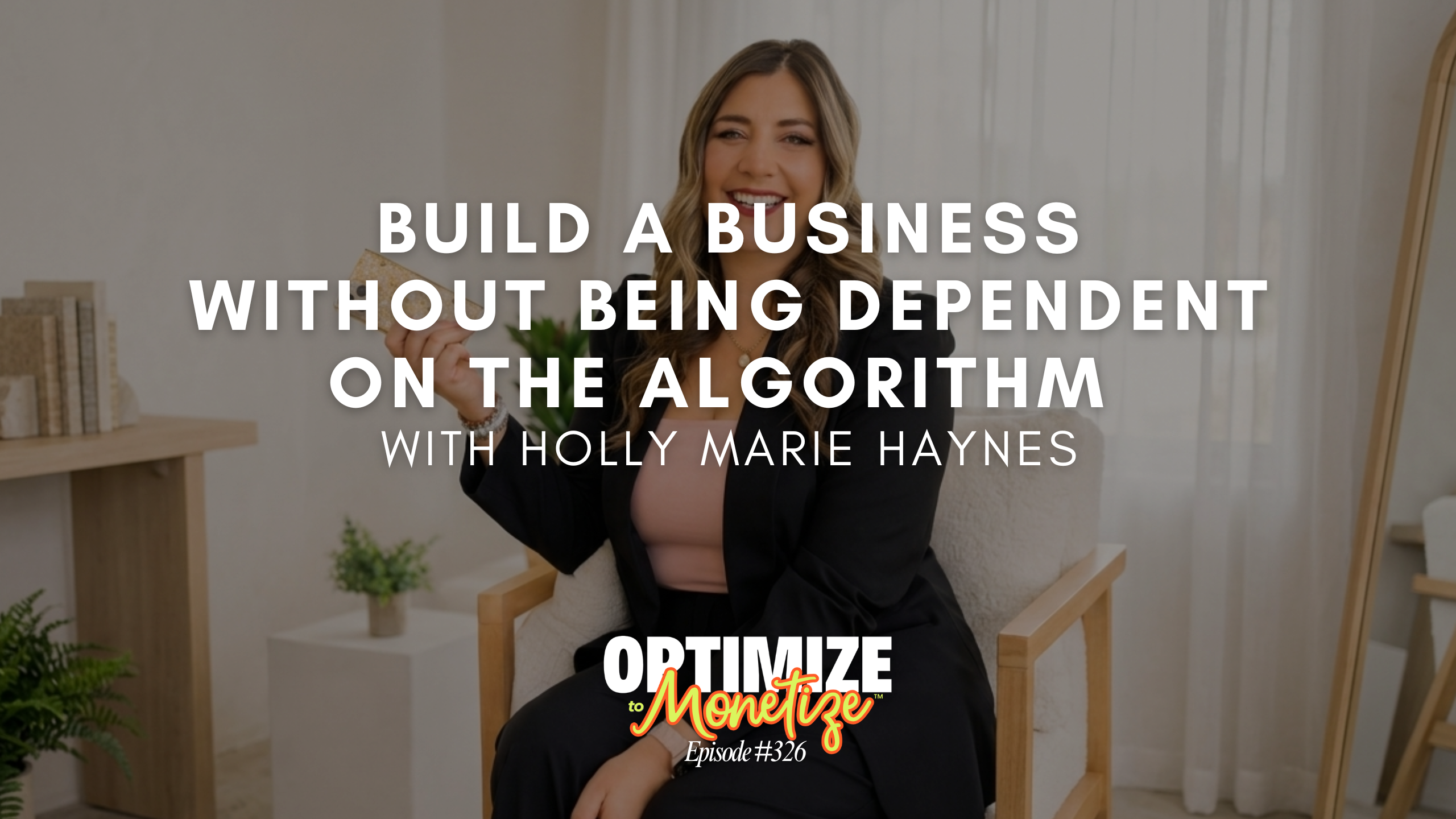
That is the cycle Holly Haynes, business and marketing strategist and founder of Anti-Social School, encourages entrepreneurs to question.
The issue is not that social media is bad or that you should delete Instagram tomorrow.
The bigger question is whether your business can continue attracting leads and generating sales when you are not posting.
Because if your visibility disappears the second you stop creating social media content, you have not built much leverage into your marketing.
Start With Where Your Leads and Sales Are Actually Coming From
Before deciding you need to post more—or deciding you are never posting again—look at your data.
Where are your clients actually finding you?
Where are your leads coming from?
Which marketing activities are leading to sales?
You may assume Instagram is driving your business because that is where you spend so much of your marketing time. But when you look at your numbers, you might discover that most of your clients actually come from referrals, your email list, podcast interviews, workshops, Google searches, or partnerships.
Holly shared that 71% of her sales come from email.
That changes the conversation.
If social media is driving the majority of your leads and sales, you probably do not want to suddenly abandon it.
But if it isn’t?
You may want to reconsider how much of your time and energy it deserves.
Build Marketing Assets That Keep Working After You Create Them
This is where long-form content becomes incredibly valuable.
Think about the difference between a Reel you posted three months ago and a podcast episode, YouTube video, or SEO-optimized blog post you published three months ago.
Someone can still discover that long-form content today.
They can find it through Google. They can search for an answer on YouTube. They can discover your podcast. Increasingly, they can even find your business because an AI search tool surfaced your content while answering their question.
That means the work you did once can continue bringing new people into your world.
Holly refers to this as having a home base for your content.
Your home base could be:
- A podcast
- A blog
- A website
- YouTube or another source of searchable long-form content
The goal is to consistently create something substantial that demonstrates what you know, answers the questions your ideal clients are asking, and gives people another way to discover you.
And consistent does not automatically mean weekly.
If weekly content works for you, great.
If every other week is realistic, do that.
If once a month is what you can sustain, start there.
The point is to build something that compounds rather than continually creating content that disappears.
Stop Creating Every Piece of Content From Scratch
Once you have that core piece of content, it can become the source for everything else.
This is one of the easiest ways to simplify your content marketing strategy.
A podcast episode can become a blog post, YouTube content, an email, LinkedIn content, social media posts, and additional searchable content.
Now you are not sitting down Monday morning staring at a blank screen thinking, “Okay, what am I going to post this week?”
You already know.
You are taking the ideas you have already developed and finding more ways for the right people to discover them.
And AI has made this process significantly easier.
AI tools can help you extract ideas from long-form content, repurpose those ideas into different formats, research questions your audience is asking, and create supporting content much faster.
The important distinction is that AI does not need to replace you.
It can help extend the work you are already doing so you have more time to be the person building relationships, sharing your perspective, serving your clients, and creating trust.
SEO Is Changing Because the Way People Search Is Changing
For years, when we talked about search, we primarily talked about Google and SEO.
Now people are searching differently.
Someone who wants to know how to get more clients without posting on Instagram every day might still Google that question.
But they might also ask ChatGPT, Claude, Perplexity, or another AI tool.
That shift is why conversations around GEO, or generative engine optimization, have become increasingly important.
The goal is no longer simply to rank a page for a keyword.
You also want to create clear, useful content around the specific questions your ideal clients are asking so search engines and AI tools can understand what you do, who you help, and what you know.
That is another reason long-form content matters.
When you consistently create content around the topics you want to be known for, you are building an entire library around your expertise.
Answer the Questions Your Ideal Clients Are Already Searching
You also do not need to create every article because you think your existing audience will sit down and read it.
Some content has a different job.
Holly shared that her team creates blog posts specifically around questions they want to be discovered for in search.
Think about what your ideal client might type when they are actively looking for help.
Maybe it is:
“How do I get clients without social media?”
“Do I need Instagram to grow my coaching business?”
“How can I market my course without posting every day?”
“What are alternatives to social media marketing?”
“How do I grow my email list without Instagram?”
Those questions are content opportunities.
You can create detailed resources that directly answer them and allow that content to continue working behind the scenes.
That is a very different approach from creating something simply because you feel pressure to publish a post today.
Partnerships Can Bring New People Into Your World Too
Searchable content is only one piece of building visibility outside social media.
Partnerships can be incredibly powerful because you are getting in front of an audience someone else has already built.
That could include podcast interviews, guest teaching, speaking inside someone else’s community, participating in a carefully selected bundle or summit, or collaborating with another business owner whose audience overlaps with yours.
The key word here is carefully.
More visibility does not automatically mean better visibility.
A smaller partnership with someone whose audience is filled with your ideal clients may be far more valuable than participating in every collaboration opportunity that lands in your inbox.
And if a partnership works?
There is no rule saying you can only collaborate with that person once.
Look at the data. Look at the leads. Look at the sales. Look at the relationship.
If it makes sense for both audiences, do it again.
Your Email List Is Where Visibility Can Turn Into Sales
Getting discovered is only the beginning.
Once someone finds you through search, a podcast interview, a partnership, a blog post, or even social media, what happens next?
This is where your marketing systems matter.
You need a way to bring those people into an audience you own and continue the relationship.
For many businesses, that means email.
Your email list gives you the opportunity to continue educating, nurturing, building trust, and ultimately selling without needing someone to stumble across another one of your posts.
That is the difference between simply getting attention and building a marketing ecosystem.
You are creating multiple ways for the right people to discover you and then connecting those pieces so the relationship can continue.
Social Media Can Become a Choice, Not the Entire Strategy
None of this means you have to stop using social media.
Use it if it works.
Use it if your clients are coming from there.
Use it if you enjoy it.
Repurpose your long-form content there. Share behind-the-scenes moments. Connect with your audience. Have fun with it.
But there is a huge difference between using social media because it supports your marketing strategy and feeling like your business will disappear if you stop posting for a week.
The goal is to create a business with multiple ways for new people to find you.
Long-form content can build authority.
SEO and AI search can help people discover you.
Partnerships can introduce you to new audiences.
Your email list can continue the relationship.
And your systems can move people from discovering your business to becoming leads and eventually customers.
That is how you start building marketing that works beyond today’s post—and a business that is far less dependent on tomorrow’s algorithm.